
Dispatcher and Spie Batignolles, streamlining infrastructure operations.
Spie Batignolles achieved seamless infrastructure management by digitizing their workforce planning, trading time-consuming Excel spreadsheets for a collaborative tool that synchronizes HR and site operations.
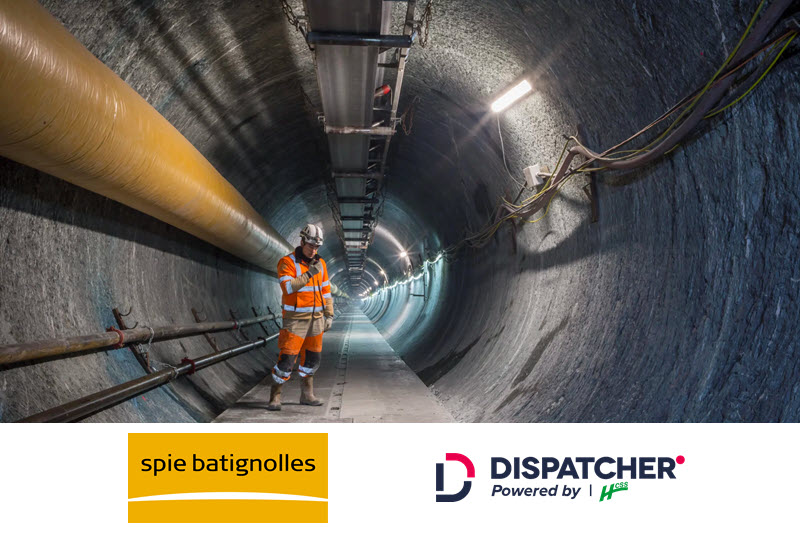
Spie Batignolles is synonymous with large-scale civil engineering, from the Mont-Blanc Tunnel to complex underground construction. However, even the most advanced projects can be slowed down by outdated administrative processes. We recently spoke with key stakeholders from their HR and Operations teams to discuss their digital transformation journey. From replacing fragmented Excel spreadsheets with a single collaborative tool to integrating real-time field data, the team explains how Dispatcher has become the essential link between HR, operations, and the construction site, ensuring the right personnel are always where they are needed most.
Caroline Rivy: My name is Caroline Rivy, Head of Mobility within the Human Resources Department at Spie Batignolles Civil Engineering.
Dominique Weiss: Dominique Weiss, Deputy Works Director at Spie Batignolles Foundations, Production Department.
Olivier Vella: Olivier Vella, Senior Site Manager at Spie Batignolles Foundations, with 33 years of experience.
What led you to use Dispatcher?
Caroline Rivy: In concrete terms, Mobility Managers are responsible for ensuring that all employees are properly assigned to projects and that mobilizations and their durations are consistently up to date ahead of operations meetings.
When I arrived in 2020, all resource management and project staffing was handled in Excel. Before each major operations meeting, we would print everything out and review line by line all the data related to employee mobilization. It was very heavy, time-consuming, and, above all, not suited to our needs.
How do you use Dispatcher?
Caroline Rivy: We systematically appoint a site relay as soon as a project starts, which allows us to keep all mobilization data updated in real time. A good example is Line 18-3 of the Grand Paris Express. Today, all our employees are listed on the platform, along with our staffing needs. This overall visibility allows us to anticipate potential short- and medium-term issues on our sites.
How has Dispatcher changed the way you work?
Olivier Vella: Dispatcher has changed the way we work because we now operate from a single shared file instead of multiple Excel sheets with different tabs. This has significantly improved our workflow.
The entire production department works from the same file. Since we are three slightly different divisions—piles, diaphragm walls, and injection—it has become much easier to see staff availability from one week to the next.
Dominique Weiss: Today, we use Dispatcher to consolidate different departments—Piles, Slurry Walls, and Injection.
One advantage of Dispatcher is that it is integrated with our time and activity management tool. This allows us to see vacations in real time, as the system is constantly updated. Sick leave and time off are all displayed directly in Dispatcher.
How did Dispatcher meet your needs?
Caroline Rivy: Dispatcher proved to be the solution best suited to our needs. We were looking for something easy to use, intuitive, and above all collaborative.
The idea was for every stakeholder to have real-time access to information about employee mobilization and project needs—and Dispatcher delivered exactly that.
Dispatcher in 3 words
Caroline Rivy: Collaborative, intuitive, and simple.
